
Stotram
Govindashtakam | गोविन्दाष्टकम्
Original · संस्कृतम्
Govindashtakam Sanskrit Lyrics
सत्यं ज्ञानमनन्तं नित्यमनाकाशं परमाकाशं गोष्ठप्राङ्गणरिङ्खणलोलमनायासं परमायासम् । मायाकल्पितनानाकारमनाकारं भुवनाकारं क्ष्मामानाथमनाथं प्रणमत गोविन्दं परमानन्दम् ॥१॥ मृत्स्नामत्सीहेति यशोदाताडनशैशवसन्त्रासं व्यादितवक्त्रालोकितलोकालोकचतुर्दशलोकालिम् । लोकत्रयपुरमूलस्तम्भं लोकालोकमनालोकं लोकेशं परमेशं प्रणमत गोविन्दं परमानन्दम् ॥२॥ त्रैविष्टपरिपुवीरघ्नं क्षितिभारघ्नं भवरोगघ्नं कैवल्यं नवनीताहारमनाहारं भुवनाहारम् । वैमल्यस्फुटचेतोवृत्तिविशेषाभासमनाभासं शैवं केवलशान्तं प्रणमत गोविन्दं परमानन्दम् ॥३॥ गोपालं प्रभुलीलाविग्रहगोपालं कुलगोपालं गोपीखेलनगोवर्धनधृतिलीलालालितगोपालम् । गोभिर्निगदितगोविन्दस्फुटनामानं बहुनामानं गोपीगोचरदूरं प्रणमत गोविन्दं परमानन्दम् ॥४॥ गोपीमण्डलगोष्ठीभेदं भेदावस्थमभेदाभं शश्वद्गोखुरनिर्धूतोद्गतधूलीधूसरसौभाग्यम् । श्रद्धाभक्तिगृहीतानन्दमचिन्त्यं चिन्तितसद्भावं चिन्तामणिमहिमानं प्रणमत गोविन्दं परमानन्दम् ॥५॥ स्नानव्याकुलयोषिद्वस्त्रमुपादायागमुपारूढं व्यादित्सन्तीरथ दिग्वस्त्रा ह्युपदातुमुपाकर्षन्तम् । निर्धूतद्वयशोकविमोहं बुद्धं बुद्धेरन्तःस्थं सत्तामात्रशरीरं प्रणमत गोविन्दं परमानन्दम् ॥६॥ कान्तं कारणकारणमादिमनादिं कालमनाभासं कालिन्दीगतकालियशिरसि मुहुर्नृत्यन्तं नृत्यन्तम् । कालं कालकलातीतं कलिताशेषं कलिदोषघ्नं कालत्रयगतिहेतुं प्रणमत गोविन्दं परमानन्दम् ॥७॥ वृन्दावनभुवि वृन्दारकगणवृन्दाराध्यं वन्देऽहं कुन्दाभामलमन्दस्मेरसुधानन्दं सुहृदानन्दम् । वन्द्याशेषमहामुनिमानसवन्द्यानन्दपदद्वन्द्वं वन्द्याशेषगुणाब्धिं प्रणमत गोविन्दं परमानन्दम् ॥८॥ गोविन्दाष्टकमेतदधीते गोविन्दार्पितचेता यो गोविन्दाच्युत माधव विष्णो गोकुलनायक कृष्णेति । गोविन्दाङ्घ्रिसरोजध्यानसुधाजलधौतसमस्ताघो गोविन्दं परमानन्दामृतमन्तःस्थं स तमभ्येति ॥९॥
Transliteration
Govindashtakam English Lyrics
satyaṃ jñānamanantaṃ nityamanākāśaṃ paramākāśaṃ goṣṭhaprāṅgaṇariṅkhaṇalolamanāyāsaṃ paramāyāsam | māyākalpitanānākāramanākāraṃ bhuvanākāraṃ kṣmāmānāthamanāthaṃ praṇamata govindaṃ paramānandam ||1|| mṛtsnāmatsīheti yaśodātāḍanaśaiśavasantrāsaṃ vyāditavaktrālokitalokālokacaturdaśalokālim | lokatrayapuramūlastambhaṃ lokālokamanālokaṃ lokeśaṃ parameśaṃ praṇamata govindaṃ paramānandam ||2|| traiviṣṭaparipuvīraghnaṃ kṣitibhāraghnaṃ bhavarogaghnaṃ kaivalyaṃ navanītāhāramanāhāraṃ bhuvanāhāram | vaimalyasphuṭacetovṛttiviśeṣābhāsamanābhāsaṃ śaivaṃ kevalaśāntaṃ praṇamata govindaṃ paramānandam ||3|| gopālaṃ prabhulīlāvigrahagopālaṃ kulagopālaṃ gopīkhelanagovardhanadhṛtilīlālālitagopālam | gobhirnigaditagovindasphuṭanāmānaṃ bahunāmānaṃ gopīgocaradūraṃ praṇamata govindaṃ paramānandam ||4|| gopīmaṇḍalagoṣṭhībhedaṃ bhedāvasthamabhedābhaṃ śaśvadgokhuranirdhūtodgatadhūlīdhūsarasaubhāgyam | śraddhābhaktigṛhītānandamacintyaṃ cintitasadbhāvaṃ cintāmaṇimahimānaṃ praṇamata govindaṃ paramānandam ||5|| snānavyākulayoṣidvastramupādāyāgamupārūḍhaṃ vyāditsantīratha digvastrā hyupadātumupākarṣantam | nirdhūtadvayaśokavimohaṃ buddhaṃ buddherantaḥsthaṃ sattāmātraśarīraṃ praṇamata govindaṃ paramānandam ||6|| kāntaṃ kāraṇakāraṇamādimanādiṃ kālamanābhāsaṃ kālindīgatakāliyaśirasi muhurnṛtyantaṃ nṛtyantam | kālaṃ kālakalātītaṃ kalitāśeṣaṃ kalidoṣaghnaṃ kālatrayagatihetuṃ praṇamata govindaṃ paramānandam ||7|| vṛndāvanabhuvi vṛndārakagaṇavṛndārādhyaṃ vande'haṃ kundābhāmalamandasmerasudhānandaṃ suhṛdānandam | vandyāśeṣamahāmunimānasavandyānandapadadvandvaṃ vandyāśeṣaguṇābdhiṃ praṇamata govindaṃ paramānandam ||8|| govindāṣṭakametadadhīte govindārpitacetā yo govindācyuta mādhava viṣṇo gokulanāyaka kṛṣṇeti | govindāṅghrisarojadhyānasudhājaladhautasamastāgho govindaṃ paramānandāmṛtamantaḥsthaṃ sa tamabhyeti ||9||
Meaning
Govindashtakam English Meaning
Bow to Govinda, the supreme bliss: truth, knowledge, the infinite, the eternal; not space, yet the highest space; who crawled restlessly about the cowherds' courtyard; effortless in himself, yet reached only by the highest effort; without form, yet taking many forms through maya, with the whole world as his form; lord of Bhumi and of Lakshmi, himself without a lord. Bow to Govinda, the supreme bliss: the child who trembled when Yashoda scolded and struck him, asking 'Have you eaten earth here?'; in whose opened mouth she saw the fourteen worlds and the Lokaloka mountains; the pillar that holds up the city of the three worlds; the light of all worlds, himself beyond sight; the lord of the worlds, the supreme lord. Bow to Govinda, the supreme bliss: slayer of the mighty foes of the gods, remover of the earth's burden, healer of the sickness of worldly existence; liberation itself; who fed on butter, yet needs no food, yet swallows the worlds; who shines in a mind made clear by purity, yet is beyond every appearance; auspicious, alone, wholly at peace. Bow to Govinda, the supreme bliss: the cowherd; the Lord who took a cowherd's form in play; the protector of his clan; who played with the gopis and, lifting Govardhana, sheltered the cowherds; whose name Govinda was clearly proclaimed by the cows; who has many names; who, though the gopis saw him every day, remained far beyond their grasp. Bow to Govinda, the supreme bliss: who appears separately in each gathering of the circle of gopis, standing in difference yet shining as the one without difference; whose beauty is grey with the dust raised endlessly by the hooves of the cows; the bliss grasped through faith and devotion; beyond thought, yet his true being is what the mind dwells on; whose greatness is that of the wish-fulfilling gem. Bow to Govinda, the supreme bliss: who took the clothes of the women absorbed in their bathing and climbed a tree, and then drew near those unclothed women, who longed to have them back, to return them; who has shaken off the grief and delusion born of duality; awareness itself, dwelling within the intellect; whose only body is pure existence. Bow to Govinda, the supreme bliss: the beloved; the cause of all causes; the first, yet without beginning; dark of hue, yet beyond all seeing; who danced and danced again on the head of Kaliya in the Yamuna; Time itself, yet beyond every measure of time; who comprehends all things; destroyer of the faults of the Kali age; the cause of the course of past, present and future. I worship him who, in the land of Vrindavana, is adored by the hosts of the gods; whose gentle smile, pure and white as jasmine, is a nectar of joy and the delight of his friends; whose blissful feet are honoured in the hearts of all the revered great sages; the ocean of every praiseworthy virtue. Bow to Govinda, the supreme bliss. Whoever recites this Govindashtakam with a mind given over to Govinda, calling 'Govinda, Achyuta, Madhava, Vishnu, lord of Gokula, Krishna!', has every sin washed away by the nectar-water of meditation on Govinda's lotus feet, and reaches that Govinda, the nectar of supreme bliss who dwells within.
अर्थ
Govindashtakam Hindi Meaning
जो सत्य, ज्ञान, अनन्त और नित्य हैं; आकाश न होकर भी परम आकाश हैं; जो गोकुल के आँगन में चंचलता से घुटनों के बल चलते थे; स्वयं प्रयासरहित होकर भी परम प्रयास से प्राप्त होते हैं; निराकार होकर भी माया से अनेक रूप धारण करते हैं और समस्त जगत जिनका रूप है; जो भूदेवी और लक्ष्मी के स्वामी हैं पर जिनका कोई स्वामी नहीं, उन परमानन्दस्वरूप गोविन्द को प्रणाम करो। 'क्या तूने यहाँ मिट्टी खाई है?' कहकर यशोदा के डाँटने-मारने पर जो बालरूप में भयभीत हुए; जिनके खुले मुख में चौदहों लोक और लोकालोक पर्वत दिखाई दिए; जो तीनों लोक रूपी नगर के मूल स्तम्भ हैं; जो सब लोकों को प्रकाशित करते हैं पर स्वयं दृष्टि से परे हैं; उन लोकेश, परमेश्वर, परमानन्दस्वरूप गोविन्द को प्रणाम करो। जो देवताओं के शत्रु वीर असुरों का वध करने वाले, पृथ्वी का भार उतारने वाले और भवरोग मिटाने वाले हैं; जो स्वयं कैवल्य (मोक्ष) हैं; जो माखन खाते हैं, फिर भी आहार से रहित हैं और प्रलय में समस्त लोकों को ग्रस लेते हैं; जो निर्मल चित्त की विशेष वृत्ति में प्रकाशित होते हैं, फिर भी सब प्रकाशों से परे हैं; उन कल्याणमय, अद्वितीय, परम शान्त, परमानन्दस्वरूप गोविन्द को प्रणाम करो। जो गोपाल हैं; जिन्होंने लीला के लिए ग्वाले का रूप धारण किया; जो अपने कुल के रक्षक हैं; जिन्होंने गोपियों संग क्रीडा की और गोवर्धन उठाकर ग्वालों का लालन-पालन किया; गौओं ने जिनका 'गोविन्द' नाम स्पष्ट रूप से पुकारा; जिनके अनेक नाम हैं; जो गोपियों के नित्य सामने रहकर भी उनकी समझ से बहुत परे रहे; उन परमानन्दस्वरूप गोविन्द को प्रणाम करो। जो गोपी-मण्डल की सभाओं में हर गोपी के साथ अलग-अलग प्रतीत होते हैं; भेद में स्थित होकर भी अभेद रूप से प्रकाशित हैं; जिनका सौन्दर्य गायों के खुरों से निरन्तर उठी धूल से धूसरित है; जो श्रद्धा और भक्ति से ग्रहण किए जाने वाले आनन्द हैं; अचिन्त्य होकर भी जिनके सत्स्वरूप का चिन्तन किया जाता है; जिनकी महिमा चिन्तामणि के समान है; उन परमानन्दस्वरूप गोविन्द को प्रणाम करो। जिन्होंने स्नान में मग्न गोपियों के वस्त्र उठा लिए और वृक्ष पर चढ़ गए, फिर वस्त्र वापस पाने को आतुर उन गोपियों को वस्त्र लौटाने के लिए अपने पास बुलाया; जो द्वैत से उत्पन्न शोक और मोह से रहित हैं; जो स्वयं ज्ञानस्वरूप हैं और बुद्धि के भीतर स्थित हैं; जिनका शरीर केवल सत्ता मात्र है; उन परमानन्दस्वरूप गोविन्द को प्रणाम करो। जो परम प्रिय हैं, कारणों के भी कारण हैं, आदि होकर भी अनादि हैं, श्याम वर्ण होकर भी दृष्टि से परे हैं; जिन्होंने यमुना में कालिय नाग के फन पर बार-बार नृत्य किया; जो स्वयं काल हैं पर काल की कलाओं से परे हैं; जो सब कुछ जानते हैं, कलियुग के दोषों का नाश करते हैं और तीनों कालों की गति के कारण हैं; उन परमानन्दस्वरूप गोविन्द को प्रणाम करो। वृन्दावन की भूमि में देवताओं के समूह जिनकी आराधना करते हैं, उन्हें मैं वन्दन करता हूँ; कुन्द-पुष्प के समान उज्ज्वल, निर्मल मन्द मुस्कान से जो अमृत-सा आनन्द देते हैं और अपने सखाओं के आनन्द हैं; समस्त पूज्य महामुनियों के मन में जिनके आनन्दमय चरण-युगल वन्दित हैं; जो सब वन्दनीय गुणों के सागर हैं; उन परमानन्दस्वरूप गोविन्द को प्रणाम करो। जो गोविन्द में चित्त अर्पित करके 'हे गोविन्द, अच्युत, माधव, विष्णु, गोकुलनायक, कृष्ण' इस प्रकार पुकारते हुए इस गोविन्दाष्टक का पाठ करता है, गोविन्द के चरण-कमलों के ध्यान रूपी अमृत-जल से उसके सब पाप धुल जाते हैं और वह अपने भीतर स्थित परमानन्द-अमृतस्वरूप उन गोविन्द को प्राप्त होता है।
Listen
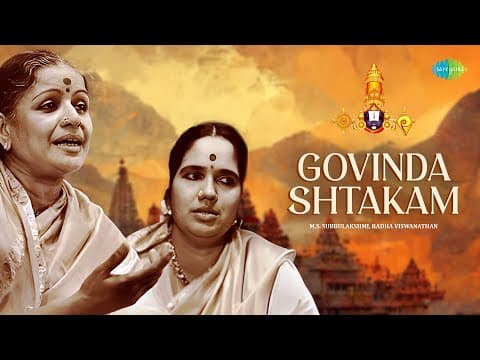
Recitation video
Significance
Govindashtakam Significance
Eight verses by Adi Shankaracharya that set scenes from the child Krishna's life in Gokula (eating mud, stealing the gopis' clothes, dancing on Kaliya) side by side with Upanishadic descriptions of Brahman as truth, knowledge and the infinite; each ends 'bow to Govinda, the supreme bliss'. A ninth verse gives the fruit of reciting it. The text is the widely chanted version (sanskritdocuments, Kanchi, Drik Panchang); the Sringeri edition differs in several words of verses 4, 6, 7 and 8 (see variants).
Keep reading