
Stotram
Gita Dhyanam | गीताध्यानम्
Original · संस्कृतम्
Gita Dhyanam Sanskrit Lyrics
ॐ पार्थाय प्रतिबोधितां भगवता नारायणेन स्वयं व्यासेन ग्रथितां पुराणमुनिना मध्ये महाभारतम् । अद्वैतामृतवर्षिणीं भगवतीमष्टादशाध्यायिनीम् अम्ब त्वामनुसन्दधामि भगवद्गीते भवद्वेषिणीम् ॥१॥ नमोऽस्तु ते व्यास विशालबुद्धे फुल्लारविन्दायतपत्रनेत्र । येन त्वया भारततैलपूर्णः प्रज्वालितो ज्ञानमयः प्रदीपः ॥२॥ प्रपन्नपारिजाताय तोत्रवेत्रैकपाणये । ज्ञानमुद्राय कृष्णाय गीतामृतदुहे नमः ॥३॥ सर्वोपनिषदो गावो दोग्धा गोपालनन्दनः । पार्थो वत्सः सुधीर्भोक्ता दुग्धं गीतामृतं महत् ॥४॥ वसुदेवसुतं देवं कंसचाणूरमर्दनम् । देवकीपरमानन्दं कृष्णं वन्दे जगद्गुरुम् ॥५॥ भीष्मद्रोणतटा जयद्रथजला गान्धारनीलोत्पला शल्यग्राहवती कृपेण वहनी कर्णेन वेलाकुला । अश्वत्थामविकर्णघोरमकरा दुर्योधनावर्तिनी सोत्तीर्णा खलु पाण्डवै रणनदी कैवर्तकः केशवः ॥६॥ पाराशर्यवचः सरोजममलं गीतार्थगन्धोत्कटं नानाख्यानककेसरं हरिकथासम्बोधनाबोधितम् । लोके सज्जनषट्पदैरहरहः पेपीयमानं मुदा भूयाद्भारतपङ्कजं कलिमलप्रध्वंसि नः श्रेयसे ॥७॥ मूकं करोति वाचालं पङ्गुं लङ्घयते गिरिम् । यत्कृपा तमहं वन्दे परमानन्दमाधवम् ॥८॥ यं ब्रह्मा वरुणेन्द्ररुद्रमरुतः स्तुन्वन्ति दिव्यैः स्तवै- र्वेदैः साङ्गपदक्रमोपनिषदैर्गायन्ति यं सामगाः । ध्यानावस्थिततद्गतेन मनसा पश्यन्ति यं योगिनो यस्यान्तं न विदुः सुरासुरगणा देवाय तस्मै नमः ॥९॥
Transliteration
Gita Dhyanam English Lyrics
oṃ pārthāya pratibodhitāṃ bhagavatā nārāyaṇena svayaṃ vyāsena grathitāṃ purāṇamuninā madhye mahābhāratam | advaitāmṛtavarṣiṇīṃ bhagavatīmaṣṭādaśādhyāyinīm amba tvāmanusandadhāmi bhagavadgīte bhavadveṣiṇīm ||1|| namo'stu te vyāsa viśālabuddhe phullāravindāyatapatranetra | yena tvayā bhāratatailapūrṇaḥ prajvālito jñānamayaḥ pradīpaḥ ||2|| prapannapārijātāya totravetraikapāṇaye | jñānamudrāya kṛṣṇāya gītāmṛtaduhe namaḥ ||3|| sarvopaniṣado gāvo dogdhā gopālanandanaḥ | pārtho vatsaḥ sudhīrbhoktā dugdhaṃ gītāmṛtaṃ mahat ||4|| vasudevasutaṃ devaṃ kaṃsacāṇūramardanam | devakīparamānandaṃ kṛṣṇaṃ vande jagadgurum ||5|| bhīṣmadroṇataṭā jayadrathajalā gāndhāranīlotpalā śalyagrāhavatī kṛpeṇa vahanī karṇena velākulā | aśvatthāmavikarṇaghoramakarā duryodhanāvartinī sottīrṇā khalu pāṇḍavai raṇanadī kaivartakaḥ keśavaḥ ||6|| pārāśaryavacaḥ sarojamamalaṃ gītārthagandhotkaṭaṃ nānākhyānakakesaraṃ harikathāsambodhanābodhitam | loke sajjanaṣaṭpadairaharahaḥ pepīyamānaṃ mudā bhūyādbhāratapaṅkajaṃ kalimalapradhvaṃsi naḥ śreyase ||7|| mūkaṃ karoti vācālaṃ paṅguṃ laṅghayate girim | yatkṛpā tamahaṃ vande paramānandamādhavam ||8|| yaṃ brahmā varuṇendrarudramarutaḥ stunvanti divyaiḥ stavai- rvedaiḥ sāṅgapadakramopaniṣadairgāyanti yaṃ sāmagāḥ | dhyānāvasthitatadgatena manasā paśyanti yaṃ yogino yasyāntaṃ na viduḥ surāsuragaṇā devāya tasmai namaḥ ||9||
Meaning
Gita Dhyanam English Meaning
Om. O Mother Bhagavad Gita, I meditate on you: taught to Arjuna (Partha) by Lord Narayana himself, set by the ancient sage Vyasa in the middle of the Mahabharata, the blessed goddess of eighteen chapters who showers the nectar of non-duality and destroys rebirth. Salutations to you, Vyasa of vast intellect, whose eyes are long like the petals of a full-blown lotus, by whom the lamp of knowledge, filled with the oil of the Mahabharata, was lit. Salutations to Krishna, the wish-granting parijata tree for all who take refuge in him, who holds a goad in one hand and shows the gesture of knowledge (jnana mudra) with the other, and who milked the nectar of the Gita. All the Upanishads are the cows; the milker is Krishna, the cowherd's son; Arjuna is the calf; the wise are those who drink; and the milk is the great nectar of the Gita. I bow to Krishna, the teacher of the world: the divine son of Vasudeva, slayer of Kamsa and Chanura, the supreme joy of Devaki. Bhishma and Drona were its banks and Jayadratha its water; the king of Gandhara was its blue water-lily, Shalya its crocodile, Kripa its current and Karna its breaking waves; Ashvatthama and Vikarna were its dreadful sea-monsters and Duryodhana its whirlpool. That river of battle the Pandavas crossed, for Keshava was their ferryman. The word of Vyasa, son of Parashara, is a spotless lotus: fragrant with the meaning of the Gita, its filaments the many tales, opened into bloom by the telling of Hari's deeds, drunk with delight day after day by the good, who are the bees of this world. May this lotus of the Mahabharata, which destroys the impurity of the Kali age, bring us the highest good. I bow to Madhava, the supreme bliss, whose grace makes the mute eloquent and lets the lame cross mountains. Salutations to that God whom Brahma, Varuna, Indra, Rudra and the Maruts praise with divine hymns; whom the singers of the Sama Veda extol with the Vedas, their limbs, their pada and krama recitations and the Upanishads; whom yogis see with minds absorbed in him through meditation; and whose end neither gods nor demons know.
अर्थ
Gita Dhyanam Hindi Meaning
ॐ। हे माता भगवद्गीते! जिसका उपदेश स्वयं भगवान नारायण ने पार्थ (अर्जुन) को दिया, जिसे प्राचीन मुनि व्यास ने महाभारत के मध्य में गूँथा, जो अद्वैत रूपी अमृत की वर्षा करने वाली, अठारह अध्यायों वाली भगवती और जन्म-मरण रूपी संसार का नाश करने वाली है — मैं तुम्हारा ध्यान करता हूँ। हे विशाल बुद्धि वाले, खिले हुए कमल की पंखुड़ियों जैसे बड़े नेत्रों वाले व्यासदेव! आपको नमस्कार है, जिन्होंने महाभारत रूपी तेल से भरा हुआ ज्ञानमय दीपक प्रज्वलित किया। शरणागतों के लिए पारिजात (कल्पवृक्ष) के समान, एक हाथ में चाबुक धारण करने वाले और दूसरे में ज्ञानमुद्रा धारण किए हुए, गीता रूपी अमृत को दुहने वाले श्रीकृष्ण को नमस्कार है। सभी उपनिषद् गौएँ हैं, दुहने वाले गोपालनन्दन श्रीकृष्ण हैं, अर्जुन बछड़ा है, बुद्धिमान जन उसका पान करने वाले हैं, और गीता रूपी महान अमृत ही वह दूध है। वसुदेव के पुत्र, कंस और चाणूर का मर्दन करने वाले, देवकी को परम आनन्द देने वाले, जगद्गुरु भगवान श्रीकृष्ण की मैं वन्दना करता हूँ। जिस युद्ध रूपी नदी के भीष्म और द्रोण किनारे थे, जयद्रथ जल था, गान्धारराज नील कमल था, शल्य ग्राह (मगर) था, कृपाचार्य प्रवाह थे, कर्ण उसकी उफनती लहरें था, अश्वत्थामा और विकर्ण भयंकर मगरमच्छ थे और दुर्योधन भँवर था — उस रण-नदी को पाण्डवों ने पार कर लिया, क्योंकि केशव उनके केवट थे। पराशर-पुत्र व्यास की वाणी एक निर्मल कमल है — गीता के अर्थ रूपी सुगन्ध से भरपूर, अनेक कथाएँ जिसका केसर हैं, हरिकथा के कथन से जो खिला है, और संसार के सज्जन रूपी भ्रमर प्रतिदिन आनन्द से जिसका रस पीते हैं। कलियुग के मल का नाश करने वाला यह महाभारत रूपी कमल हमारे परम कल्याण के लिए हो। जिनकी कृपा गूँगे को वाचाल बना देती है और लँगड़े को पर्वत लाँघने योग्य बना देती है, उन परमानन्दस्वरूप माधव की मैं वन्दना करता हूँ। ब्रह्मा, वरुण, इन्द्र, रुद्र और मरुद्गण दिव्य स्तोत्रों से जिनकी स्तुति करते हैं, सामगान करने वाले अङ्ग, पद, क्रम और उपनिषदों सहित वेदों से जिनका गान करते हैं, योगीजन ध्यान में स्थित तन्मय मन से जिनका दर्शन करते हैं, और देवता तथा असुर कोई भी जिनका अन्त नहीं जानते — उन देव को नमस्कार है।
Listen
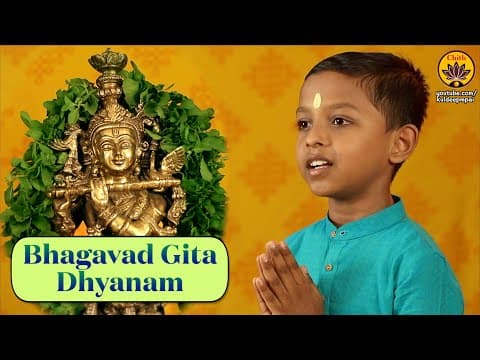
Recitation video
Significance
Gita Dhyanam Significance
Nine verses of meditation (dhyana) recited before reading or chanting the Bhagavad Gita. They honour the Gita as a mother, salute Vyasa who set it in the Mahabharata and Krishna who taught it, and picture the Kurukshetra war as a river the Pandavas crossed with Krishna as their ferryman. The author is not known for certain; the set is popularly ascribed to Madhusudana Sarasvati, and some verses (such as 'Mukam karoti vachalam') are also recited on their own.
Keep reading