
Stotram
Bhaja Govindam | भज गोविन्दम्
Original · संस्कृतम्
Bhaja Govindam Sanskrit Lyrics
भज गोविन्दं भज गोविन्दं गोविन्दं भज मूढमते । सम्प्राप्ते सन्निहिते काले नहि नहि रक्षति डुकृङ्करणे ॥१॥ मूढ जहीहि धनागमतृष्णां कुरु सद्बुद्धिं मनसि वितृष्णाम् । यल्लभसे निजकर्मोपात्तं वित्तं तेन विनोदय चित्तम् ॥२॥ नारीस्तनभरनाभीदेशं दृष्ट्वा मा गा मोहावेशम् । एतन्मांसवसादिविकारं मनसि विचिन्तय वारं वारम् ॥३॥ नलिनीदलगतजलमतितरलं तद्वज्जीवितमतिशयचपलम् । विद्धि व्याध्यभिमानग्रस्तं लोकं शोकहतं च समस्तम् ॥४॥ यावद्वित्तोपार्जनसक्तस्तावन्निजपरिवारो रक्तः । पश्चाज्जीवति जर्जरदेहे वार्तां कोऽपि न पृच्छति गेहे ॥५॥ यावत्पवनो निवसति देहे तावत्पृच्छति कुशलं गेहे । गतवति वायौ देहापाये भार्या बिभ्यति तस्मिन्काये ॥६॥ बालस्तावत्क्रीडासक्तः तरुणस्तावत्तरुणीसक्तः । वृद्धस्तावच्चिन्तासक्तः परमे ब्रह्मणि कोऽपि न सक्तः ॥७॥ का ते कान्ता कस्ते पुत्रः संसारोऽयमतीव विचित्रः । कस्य त्वं कः कुत आयातस्तत्त्वं चिन्तय तदिह भ्रातः ॥८॥ सत्सङ्गत्वे निस्सङ्गत्वं निस्सङ्गत्वे निर्मोहत्वम् । निर्मोहत्वे निश्चलतत्त्वं निश्चलतत्त्वे जीवन्मुक्तिः ॥९॥ वयसि गते कः कामविकारः शुष्के नीरे कः कासारः । क्षीणे वित्ते कः परिवारः ज्ञाते तत्त्वे कः संसारः ॥१०॥ मा कुरु धनजनयौवनगर्वं हरति निमेषात्कालः सर्वम् । मायामयमिदमखिलं हित्वा ब्रह्मपदं त्वं प्रविश विदित्वा ॥११॥ दिनयामिन्यौ सायं प्रातः शिशिरवसन्तौ पुनरायातः । कालः क्रीडति गच्छत्यायुस्तदपि न मुञ्चत्याशावायुः ॥१२॥ का ते कान्ता धनगतचिन्ता वातुल किं तव नास्ति नियन्ता । त्रिजगति सज्जनसङ्गतिरेका भवति भवार्णवतरणे नौका ॥१३॥ द्वादशमञ्जरिकाभिरशेषः कथितो वैयाकरणस्यैषः । उपदेशोऽभूद्विद्यानिपुणैः श्रीमच्छङ्करभगवच्छरणैः ॥१३अ॥ जटिलो मुण्डी लुञ्छितकेशः काषायाम्बरबहुकृतवेषः । पश्यन्नपि च न पश्यति मूढो ह्युदरनिमित्तं बहुकृतवेषः ॥१४॥ अङ्गं गलितं पलितं मुण्डं दशनविहीनं जातं तुण्डम् । वृद्धो याति गृहीत्वा दण्डं तदपि न मुञ्चत्याशापिण्डम् ॥१५॥ अग्रे वह्निः पृष्ठे भानुः रात्रौ चुबुकसमर्पितजानुः । करतलभिक्षस्तरुतलवासस्तदपि न मुञ्चत्याशापाशः ॥१६॥ कुरुते गङ्गासागरगमनं व्रतपरिपालनमथवा दानम् । ज्ञानविहीनः सर्वमतेन मुक्तिं न भजति जन्मशतेन ॥१७॥ सुरमन्दिरतरुमूलनिवासः शय्या भूतलमजिनं वासः । सर्वपरिग्रहभोगत्यागः कस्य सुखं न करोति विरागः ॥१८॥ योगरतो वा भोगरतो वा सङ्गरतो वा सङ्गविहीनः । यस्य ब्रह्मणि रमते चित्तं नन्दति नन्दति नन्दत्येव ॥१९॥ भगवद्गीता किञ्चिदधीता गङ्गाजललवकणिका पीता । सकृदपि येन मुरारिसमर्चा क्रियते तस्य यमेन न चर्चा ॥२०॥ पुनरपि जननं पुनरपि मरणं पुनरपि जननीजठरे शयनम् । इह संसारे बहुदुस्तारे कृपयाऽपारे पाहि मुरारे ॥२१॥ रथ्याचर्पटविरचितकन्थः पुण्यापुण्यविवर्जितपन्थः । योगी योगनियोजितचित्तो रमते बालोन्मत्तवदेव ॥२२॥ कस्त्वं कोऽहं कुत आयातः का मे जननी को मे तातः । इति परिभावय सर्वमसारं विश्वं त्यक्त्वा स्वप्नविचारम् ॥२३॥ त्वयि मयि चान्यत्रैको विष्णुर्व्यर्थं कुप्यसि मय्यसहिष्णुः । भव समचित्तः सर्वत्र त्वं वाञ्छस्यचिराद्यदि विष्णुत्वम् ॥२४॥ शत्रौ मित्रे पुत्रे बन्धौ मा कुरु यत्नं विग्रहसन्धौ । सर्वस्मिन्नपि पश्यात्मानं सर्वत्रोत्सृज भेदाज्ञानम् ॥२५॥ कामं क्रोधं लोभं मोहं त्यक्त्वाऽऽत्मानं भावय कोऽहम् । आत्मज्ञानविहीना मूढास्ते पच्यन्ते नरकनिगूढाः ॥२६॥ गेयं गीतानामसहस्रं ध्येयं श्रीपतिरूपमजस्रम् । नेयं सज्जनसङ्गे चित्तं देयं दीनजनाय च वित्तम् ॥२७॥ सुखतः क्रियते रामाभोगः पश्चाद्धन्त शरीरे रोगः । यद्यपि लोके मरणं शरणं तदपि न मुञ्चति पापाचरणम् ॥२८॥ अर्थमनर्थं भावय नित्यं नास्ति ततः सुखलेशः सत्यम् । पुत्रादपि धनभाजां भीतिः सर्वत्रैषा विहिता रीतिः ॥२९॥ प्राणायामं प्रत्याहारं नित्यानित्यविवेकविचारम् । जाप्यसमेतसमाधिविधानं कुर्ववधानं महदवधानम् ॥३०॥ गुरुचरणाम्बुजनिर्भरभक्तः संसारादचिराद्भव मुक्तः । सेन्द्रियमानसनियमादेवं द्रक्ष्यसि निजहृदयस्थं देवम् ॥३१॥ मूढः कश्चन वैयाकरणो डुकृङ्करणाध्ययनधुरीणः । श्रीमच्छङ्करभगवच्छिष्यैः बोधित आसीच्छोधितकरणः ॥३२॥ भज गोविन्दं भज गोविन्दं गोविन्दं भज मूढमते । नामस्मरणादन्यमुपायं नहि पश्यामो भवतरणे ॥३३॥
Transliteration
Bhaja Govindam English Lyrics
bhaja govindaṃ bhaja govindaṃ govindaṃ bhaja mūḍhamate | samprāpte sannihite kāle nahi nahi rakṣati ḍukṛṅkaraṇe ||1|| mūḍha jahīhi dhanāgamatṛṣṇāṃ kuru sadbuddhiṃ manasi vitṛṣṇām | yallabhase nijakarmopāttaṃ vittaṃ tena vinodaya cittam ||2|| nārīstanabharanābhīdeśaṃ dṛṣṭvā mā gā mohāveśam | etanmāṃsavasādivikāraṃ manasi vicintaya vāraṃ vāram ||3|| nalinīdalagatajalamatitaralaṃ tadvajjīvitamatiśayacapalam | viddhi vyādhyabhimānagrastaṃ lokaṃ śokahataṃ ca samastam ||4|| yāvadvittopārjanasaktastāvannijaparivāro raktaḥ | paścājjīvati jarjaradehe vārtāṃ ko'pi na pṛcchati gehe ||5|| yāvatpavano nivasati dehe tāvatpṛcchati kuśalaṃ gehe | gatavati vāyau dehāpāye bhāryā bibhyati tasminkāye ||6|| bālastāvatkrīḍāsaktaḥ taruṇastāvattaruṇīsaktaḥ | vṛddhastāvaccintāsaktaḥ parame brahmaṇi ko'pi na saktaḥ ||7|| kā te kāntā kaste putraḥ saṃsāro'yamatīva vicitraḥ | kasya tvaṃ kaḥ kuta āyātastattvaṃ cintaya tadiha bhrātaḥ ||8|| satsaṅgatve nissaṅgatvaṃ nissaṅgatve nirmohatvam | nirmohatve niścalatattvaṃ niścalatattve jīvanmuktiḥ ||9|| vayasi gate kaḥ kāmavikāraḥ śuṣke nīre kaḥ kāsāraḥ | kṣīṇe vitte kaḥ parivāraḥ jñāte tattve kaḥ saṃsāraḥ ||10|| mā kuru dhanajanayauvanagarvaṃ harati nimeṣātkālaḥ sarvam | māyāmayamidamakhilaṃ hitvā brahmapadaṃ tvaṃ praviśa viditvā ||11|| dinayāminyau sāyaṃ prātaḥ śiśiravasantau punarāyātaḥ | kālaḥ krīḍati gacchatyāyustadapi na muñcatyāśāvāyuḥ ||12|| kā te kāntā dhanagatacintā vātula kiṃ tava nāsti niyantā | trijagati sajjanasaṅgatirekā bhavati bhavārṇavataraṇe naukā ||13|| dvādaśamañjarikābhiraśeṣaḥ kathito vaiyākaraṇasyaiṣaḥ | upadeśo'bhūdvidyānipuṇaiḥ śrīmacchaṅkarabhagavaccharaṇaiḥ ||13a|| jaṭilo muṇḍī luñchitakeśaḥ kāṣāyāmbarabahukṛtaveṣaḥ | paśyannapi ca na paśyati mūḍho hyudaranimittaṃ bahukṛtaveṣaḥ ||14|| aṅgaṃ galitaṃ palitaṃ muṇḍaṃ daśanavihīnaṃ jātaṃ tuṇḍam | vṛddho yāti gṛhītvā daṇḍaṃ tadapi na muñcatyāśāpiṇḍam ||15|| agre vahniḥ pṛṣṭhe bhānuḥ rātrau cubukasamarpitajānuḥ | karatalabhikṣastarutalavāsastadapi na muñcatyāśāpāśaḥ ||16|| kurute gaṅgāsāgaragamanaṃ vrataparipālanamathavā dānam | jñānavihīnaḥ sarvamatena muktiṃ na bhajati janmaśatena ||17|| suramandiratarumūlanivāsaḥ śayyā bhūtalamajinaṃ vāsaḥ | sarvaparigrahabhogatyāgaḥ kasya sukhaṃ na karoti virāgaḥ ||18|| yogarato vā bhogarato vā saṅgarato vā saṅgavihīnaḥ | yasya brahmaṇi ramate cittaṃ nandati nandati nandatyeva ||19|| bhagavadgītā kiñcidadhītā gaṅgājalalavakaṇikā pītā | sakṛdapi yena murārisamarcā kriyate tasya yamena na carcā ||20|| punarapi jananaṃ punarapi maraṇaṃ punarapi jananījaṭhare śayanam | iha saṃsāre bahudustāre kṛpayā'pāre pāhi murāre ||21|| rathyācarpaṭaviracitakanthaḥ puṇyāpuṇyavivarjitapanthaḥ | yogī yoganiyojitacitto ramate bālonmattavadeva ||22|| kastvaṃ ko'haṃ kuta āyātaḥ kā me jananī ko me tātaḥ | iti paribhāvaya sarvamasāraṃ viśvaṃ tyaktvā svapnavicāram ||23|| tvayi mayi cānyatraiko viṣṇurvyarthaṃ kupyasi mayyasahiṣṇuḥ | bhava samacittaḥ sarvatra tvaṃ vāñchasyacirādyadi viṣṇutvam ||24|| śatrau mitre putre bandhau mā kuru yatnaṃ vigrahasandhau | sarvasminnapi paśyātmānaṃ sarvatrotsṛja bhedājñānam ||25|| kāmaṃ krodhaṃ lobhaṃ mohaṃ tyaktvā''tmānaṃ bhāvaya ko'ham | ātmajñānavihīnā mūḍhāste pacyante narakanigūḍhāḥ ||26|| geyaṃ gītānāmasahasraṃ dhyeyaṃ śrīpatirūpamajasram | neyaṃ sajjanasaṅge cittaṃ deyaṃ dīnajanāya ca vittam ||27|| sukhataḥ kriyate rāmābhogaḥ paścāddhanta śarīre rogaḥ | yadyapi loke maraṇaṃ śaraṇaṃ tadapi na muñcati pāpācaraṇam ||28|| arthamanarthaṃ bhāvaya nityaṃ nāsti tataḥ sukhaleśaḥ satyam | putrādapi dhanabhājāṃ bhītiḥ sarvatraiṣā vihitā rītiḥ ||29|| prāṇāyāmaṃ pratyāhāraṃ nityānityavivekavicāram | jāpyasametasamādhividhānaṃ kurvavadhānaṃ mahadavadhānam ||30|| gurucaraṇāmbujanirbharabhaktaḥ saṃsārādacirādbhava muktaḥ | sendriyamānasaniyamādevaṃ drakṣyasi nijahṛdayasthaṃ devam ||31|| mūḍhaḥ kaścana vaiyākaraṇo ḍukṛṅkaraṇādhyayanadhurīṇaḥ | śrīmacchaṅkarabhagavacchiṣyaiḥ bodhita āsīcchodhitakaraṇaḥ ||32|| bhaja govindaṃ bhaja govindaṃ govindaṃ bhaja mūḍhamate | nāmasmaraṇādanyamupāyaṃ nahi paśyāmo bhavataraṇe ||33||
Meaning
Bhaja Govindam English Meaning
Worship Govinda, worship Govinda, worship Govinda, O foolish mind! When the appointed hour of death draws near, a grammar rule like 'ḍukṛñ karaṇe' will not save you, not at all. Fool, give up the thirst to pile up wealth; turn your mind to right thinking, free of craving. Whatever money comes to you through your own work, be content with that. Do not be swept into infatuation at the sight of a woman's breasts and navel. Reflect again and again that these are only flesh and fat in another shape. Life is as unsteady as a drop of water on a lotus leaf, utterly fleeting. Know that the whole world is gripped by disease and pride and struck down by sorrow. As long as you can earn, your family is fond of you. Later, when you live on in a worn-out body, no one at home even asks after you. As long as breath dwells in the body, the people at home ask how you are. Once the breath has gone and the body has fallen, even your wife is afraid of that body. The child is caught up in play, the young man in young women, the old man in worries; no one is caught up in the supreme Brahman. Who is your wife? Who is your son? This worldly life is strange indeed. Whose are you? Who are you? Where have you come from? Think on that truth here and now, brother. From the company of the good comes detachment; from detachment, freedom from delusion; from freedom from delusion, the unmoving truth; from the unmoving truth, liberation in this very life. When youth has gone, where is lust? When the water has dried up, where is the lake? When wealth is spent, where are the hangers-on? When the truth is known, where is worldly bondage? Take no pride in wealth, followers or youth; time carries them all off in the blink of an eye. Leave behind this whole world woven of illusion, know the truth, and enter the state of Brahman. Day and night, dusk and dawn, winter and spring come round again and again. Time plays, life ebbs away, and still the wind of desire does not let go. Why fret over wife and wealth, you madman? Is there no one to guide you? In all three worlds, the company of the good alone is the boat that crosses the ocean of birth and death. With these twelve verses, like a cluster of blossoms, the whole of this teaching was given to the grammarian by the revered Shankara, master of learning. One wears matted locks, one a shaven head, one has his hair plucked out; another puts on many guises in ochre robes. The fool sees and yet does not see: all these many guises are only for the belly's sake. The limbs have withered, the head has turned grey, the mouth has lost its teeth; the old man walks leaning on a stick, and still he does not let go of his bundle of desires. Fire in front of him, the sun at his back; at night he sits with his knees drawn up to his chin; he takes alms in his palm and lives under a tree, and still the noose of desire does not release him. One may make the pilgrimage to where the Ganga meets the sea, keep vows or give gifts; but without knowledge, say all schools alike, one does not reach liberation even in a hundred births. Living in temples or at the foot of trees, sleeping on the bare ground, wearing a deerskin, giving up every possession and pleasure: whom does such dispassion not make happy? Whether given to yoga or to pleasure, whether among people or alone, the one whose mind delights in Brahman rejoices, rejoices, rejoices indeed. One who has studied even a little of the Bhagavad Gita, drunk even a drop of Ganga water, and worshipped Murari even once, has no dispute with Yama. Born again, dying again, lying again in a mother's womb: this world is so hard to cross, so boundless. In your mercy, protect me, O Murari. His patched cloak is sewn from rags picked up in the street; his path lies beyond merit and sin; the yogi whose mind is joined in yoga takes his delight like a child or one intoxicated. Who are you? Who am I? Where have I come from? Who is my mother? Who is my father? Reflect in this way, see all of it as without substance, and leave the world behind as a thing of dreams. In you, in me and everywhere else there is only one Vishnu; in vain do you grow angry with me, unable to bear me. Be even-minded towards all, if you wish soon to attain the state of Vishnu. Make no effort to fight or to make peace with enemy or friend, son or kinsman. See the Self in everyone, and everywhere give up the ignorance that sees difference. Give up lust, anger, greed and delusion, and reflect within: 'Who am I?' Fools without knowledge of the Self are thrown into hell and suffer there. Sing the Gita and the Thousand Names; meditate without pause on the form of the lord of Lakshmi; lead the mind into the company of the good; give your wealth to those in need. Men take their pleasure with women freely; afterwards, alas, disease settles in the body. Though death is everyone's last refuge in this world, still they do not give up their sinful ways. Always regard wealth as the root of harm; truly, there is not a trace of happiness in it. The rich fear even their own sons; this is the way of things everywhere. Control of the breath, withdrawal of the senses, discernment between the eternal and the passing, the practice of samadhi together with japa: do these with care, with the greatest care. Devoted wholly to the lotus feet of the guru, be free of worldly bondage before long. Through this discipline of senses and mind you will see the Lord who dwells in your own heart. A certain foolish grammarian, absorbed in learning rules like 'ḍukṛñ karaṇe', was awakened by the disciples of the revered Shankara, and his senses and mind were made pure. Worship Govinda, worship Govinda, worship Govinda, O foolish mind! Apart from remembering his name, we see no other way to cross the ocean of existence.
अर्थ
Bhaja Govindam Hindi Meaning
हे मूढ़ मन! गोविन्द का भजन कर, गोविन्द का भजन कर, गोविन्द का भजन कर। जब मृत्यु का समय निकट आ जाएगा, तब 'डुकृञ् करणे' जैसे व्याकरण के सूत्र तेरी रक्षा कदापि नहीं करेंगे। हे मूढ़! धन बटोरने की तृष्णा छोड़ दे; मन को तृष्णा-रहित करके सद्बुद्धि में लगा। अपने कर्मों से जो धन मिले, उसी से मन को सन्तुष्ट रख। स्त्री के वक्ष और नाभि-प्रदेश को देखकर मोह के आवेश में मत पड़। मन में बार-बार विचार कर कि यह तो केवल मांस और चर्बी का ही विकार है। जैसे कमल के पत्ते पर पड़ी जल की बूँद अत्यन्त चंचल होती है, वैसे ही जीवन अत्यन्त क्षणभंगुर है। जान ले कि सारा संसार रोग और अहंकार से ग्रस्त तथा शोक से पीड़ित है। जब तक तू धन कमाने में लगा है, तभी तक तेरा परिवार तुझसे प्रेम करता है। बाद में जब जर्जर शरीर लेकर जीता है, तब घर में कोई तेरी बात तक नहीं पूछता। जब तक शरीर में प्राण हैं, तभी तक घर के लोग कुशल पूछते हैं। प्राण निकल जाने और शरीर के गिर जाने पर पत्नी भी उसी शरीर से डरती है। बालक खेल में आसक्त रहता है, युवा युवतियों में, वृद्ध चिन्ताओं में; पर परब्रह्म में कोई भी आसक्त नहीं होता। तेरी पत्नी कौन है? तेरा पुत्र कौन है? यह संसार अत्यन्त विचित्र है। तू किसका है? तू कौन है? कहाँ से आया है? हे भाई, यहीं इस तत्त्व पर विचार कर। सत्संग से अनासक्ति आती है, अनासक्ति से मोह मिटता है, मोह मिटने से अचल तत्त्व की प्राप्ति होती है और अचल तत्त्व से जीवन्मुक्ति मिलती है। आयु ढल जाने पर काम-विकार कहाँ? जल सूख जाने पर सरोवर कहाँ? धन क्षीण हो जाने पर परिवार कहाँ? और तत्त्व का ज्ञान हो जाने पर संसार कहाँ? धन, जन और यौवन का गर्व मत कर; काल पल भर में सब छीन लेता है। इस समस्त मायामय जगत को छोड़कर और तत्त्व को जानकर ब्रह्मपद में प्रवेश कर। दिन और रात, सन्ध्या और प्रभात, शिशिर और वसन्त बार-बार आते-जाते हैं। काल खेलता है, आयु बीतती जाती है, फिर भी आशा रूपी वायु नहीं छोड़ती। हे बावले! पत्नी और धन की चिन्ता क्यों करता है? क्या तुझे राह दिखाने वाला कोई नहीं है? तीनों लोकों में केवल सज्जनों की संगति ही भवसागर पार करने की नौका है। बारह पुष्प-मंजरियों जैसे इन श्लोकों के द्वारा विद्या में निपुण पूज्य भगवान शंकराचार्य ने उस वैयाकरण को यह सम्पूर्ण उपदेश दिया। कोई जटाधारी है, कोई सिर मुँडाए है, कोई केश उखाड़े हुए है; कोई गेरुए वस्त्रों में तरह-तरह के वेष बनाए है। वह मूढ़ देखते हुए भी नहीं देखता; ये अनेक वेष केवल पेट भरने के लिए हैं। अंग शिथिल हो गए, सिर के बाल पक गए, मुँह दाँतों से रहित हो गया; बूढ़ा लाठी टेककर चलता है, फिर भी आशाओं की गठरी नहीं छोड़ता। आगे आग, पीछे सूर्य; रात में ठोड़ी को घुटनों से सटाकर बैठता है; हथेली पर भिक्षा लेता है और पेड़ के नीचे रहता है, फिर भी आशा का फंदा नहीं छूटता। कोई गंगासागर की यात्रा करे, व्रतों का पालन करे या दान दे; परन्तु ज्ञान के बिना, सभी मतों के अनुसार, सौ जन्मों में भी मुक्ति नहीं मिलती। देवालयों में या वृक्षों के नीचे निवास, भूमि पर शयन, मृगचर्म का वस्त्र, सब परिग्रह और भोगों का त्याग: ऐसा वैराग्य किसे सुखी नहीं करता? कोई योग में रत हो या भोग में, संगति में रहे या एकान्त में, जिसका चित्त ब्रह्म में रमता है, वही आनन्दित होता है, आनन्दित होता है, सचमुच आनन्दित होता है। जिसने भगवद्गीता का थोड़ा-सा भी अध्ययन किया, गंगाजल की एक बूँद भी पी और एक बार भी मुरारि की पूजा की, उससे यमराज कोई विवाद नहीं करते। फिर जन्म, फिर मृत्यु, फिर माता के गर्भ में शयन; यह संसार अत्यन्त दुस्तर और अपार है। हे मुरारि, कृपा करके मेरी रक्षा करो। गलियों में पड़े चिथड़ों से बनी गुदड़ी, पुण्य-पाप से परे मार्ग; योग में चित्त लगाए हुए योगी बालक या उन्मत्त की भाँति आनन्द में रमता है। तू कौन है? मैं कौन हूँ? कहाँ से आया हूँ? मेरी माता कौन है? मेरा पिता कौन है? इस प्रकार विचार कर, सबको सारहीन जानकर संसार को स्वप्न समझकर छोड़ दे। तुझमें, मुझमें और अन्यत्र सब जगह एक ही विष्णु हैं; मुझ पर असहिष्णु होकर तू व्यर्थ ही क्रोध करता है। यदि शीघ्र ही विष्णुपद पाना चाहता है, तो सबके प्रति समचित्त हो जा। शत्रु, मित्र, पुत्र या बन्धु, किसी से लड़ने या सन्धि करने का प्रयत्न मत कर। सबमें आत्मा को ही देख और सर्वत्र भेद-बुद्धि रूपी अज्ञान को छोड़ दे। काम, क्रोध, लोभ और मोह को त्यागकर अपने भीतर विचार कर कि 'मैं कौन हूँ'। आत्मज्ञान से रहित मूढ़ नरक में पड़कर कष्ट पाते हैं। गीता और सहस्रनाम का गान करना चाहिए, लक्ष्मीपति के रूप का निरन्तर ध्यान करना चाहिए, मन को सज्जनों की संगति में ले जाना चाहिए और दीन-दुखियों को धन देना चाहिए। लोग सहज ही स्त्री-भोग में लगते हैं; बाद में, हाय, शरीर में रोग घर कर लेते हैं। यद्यपि संसार में अन्त में मृत्यु ही सबकी शरण है, फिर भी मनुष्य पाप-आचरण नहीं छोड़ता। धन को सदा अनर्थ का कारण समझ; सच में उससे सुख का लेश भी नहीं मिलता। धनवानों को अपने पुत्र से भी भय रहता है; यही सब जगह की रीति है। प्राणायाम, प्रत्याहार, नित्य और अनित्य का विवेक-विचार, तथा जप सहित समाधि का अभ्यास: इन्हें सावधानी से, बड़ी सावधानी से कर। गुरु के चरणकमलों का पूर्ण भक्त बनकर शीघ्र ही संसार से मुक्त हो जा। इन्द्रियों और मन के इसी संयम से तू अपने हृदय में स्थित देव का दर्शन करेगा। 'डुकृञ् करणे' जैसे सूत्रों के अध्ययन में डूबे एक मूढ़ वैयाकरण को पूज्य भगवान शंकर के शिष्यों ने जगाया और उसके इन्द्रिय व मन शुद्ध हो गए। हे मूढ़ मन! गोविन्द का भजन कर, गोविन्द का भजन कर, गोविन्द का भजन कर। भवसागर पार करने के लिए नाम-स्मरण के अतिरिक्त हमें कोई और उपाय नहीं दिखता।
Listen
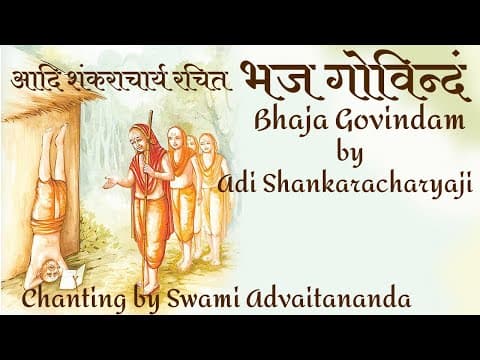
Recitation video
Significance
Bhaja Govindam Significance
Also called Moha Mudgara, 'the hammer for delusion', this hymn urges the 'foolish mind' to give up the chase after wealth, lust and status and to turn to Govinda while there is still time. Tradition holds that Adi Shankaracharya spoke the opening verse and verses 2–13 (the Dvadasha-manjarika) to an old grammarian cramming rules, that verses 14–27 (the Chaturdasha-manjarika) were added one each by fourteen of his disciples, and that the closing verses are Shankara's again. This text follows sanskritdocuments: verses 1–33 plus a verse numbered 13a that closes the first set; Sringeri and Kanchi print 31 verses, without 13a, 32 and 33.
Keep reading